


Key Takeaways
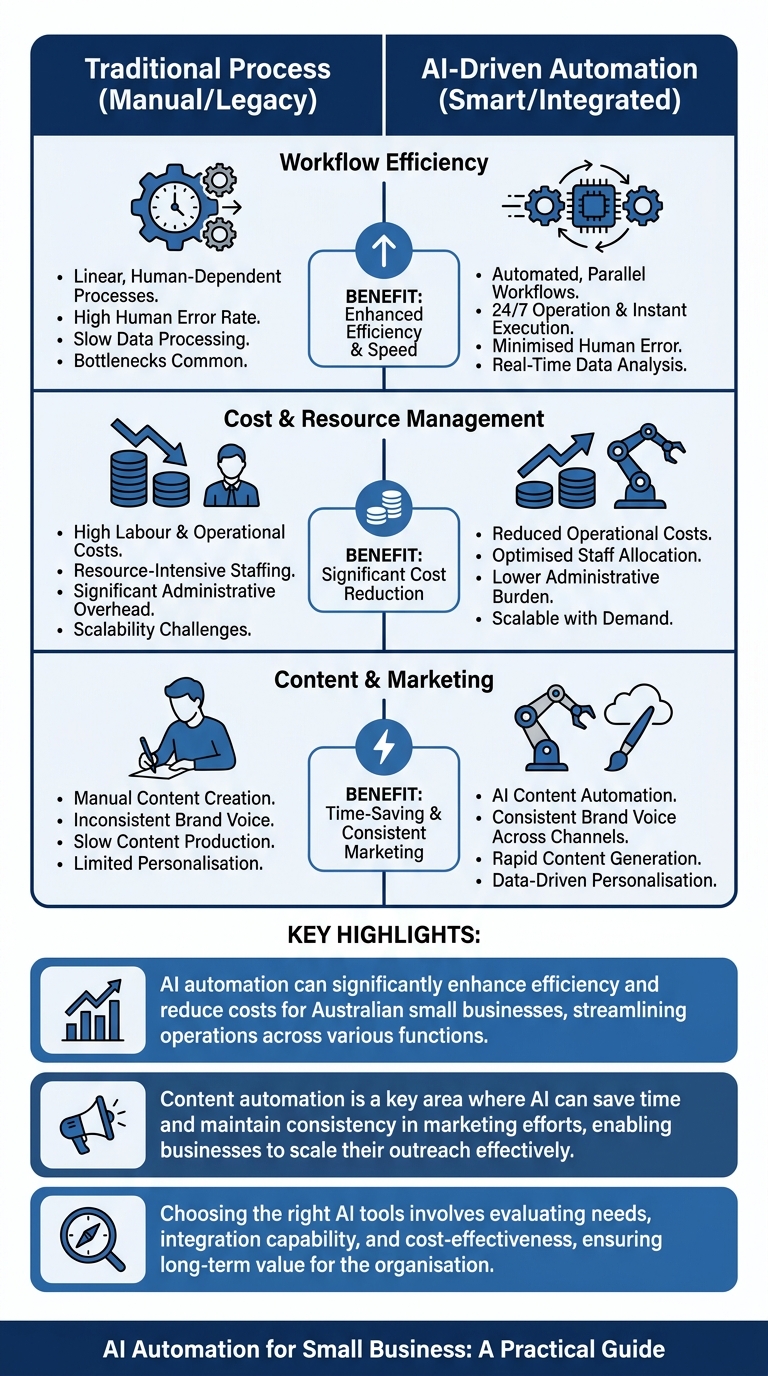
AI automation can significantly enhance efficiency and reduce costs for Australian small businesses.
Content automation is a key area where AI can save time and maintain consistency in marketing efforts.
Choosing the right AI tools involves evaluating needs, integration capability, and cost-effectiveness.
Key Answer
AI Automation tools streamline business processes, reduce costs, and enhance productivity for Australian small businesses. This guide explains how to start with AI automation and choose the right tools.
In the ever-evolving world of small business, standing out from the crowd is no easy feat. One way to gain a competitive edge is by embracing AI automation tools. Designed to streamline operations, reduce costs, and boost productivity, AI can be a game-changer for SMEs in Australia. This practical guide will walk you through the essentials of AI automation, providing insights and tips to help you implement these technologies effectively.
What Is AI Automation for Small Business?
AI automation refers to the use of artificial intelligence to perform tasks that would typically require human intervention. For small businesses in Australia, this means leveraging technology to handle repetitive and time-consuming tasks, allowing your team to focus on more strategic activities. AI can handle everything from data entry and customer service to marketing automation, providing significant value and efficiency.
Which Business Tasks Can AI Automation Tools Handle?
AI automation tools can manage a wide array of tasks. In customer service, AI chatbots can provide instant responses to customer inquiries, freeing up your staff for more complex issues. For sales, AI can automate lead scoring and email follow-ups. Marketing departments can utilise AI for content automation, such as scheduling social media posts and personalising email campaigns. By automating these processes, AI helps improve consistency and accuracy while reducing workload.
Where Should a Small Business Start?
Starting with AI automation can feel overwhelming, but a strategic approach makes it manageable. Begin by identifying the most time-consuming and repetitive tasks in your business. Consider which tasks would benefit most from automation in terms of efficiency and cost savings. Once identified, research AI tools that address these needs. Many Australian businesses find success using platforms like Zapier or Make.com, which provide low-code solutions that are easy to implement.
How Content Automation Saves Time and Effort
Content automation plays a crucial role in saving time and effort for small businesses. By automating content creation and scheduling, you maintain a consistent online presence without dedicating excessive hours to manual work. Tools like iBeVisible allow you to plan and automate blog publishing, newsletter automation, social media posting and SMS broadcasts. This not only streamlines your marketing efforts but also helps in targeting your audience more effectively.
How to Choose the Right AI Automation Tools
Choosing the right AI automation tools for your business involves understanding your specific needs and evaluating available options. Look for tools that are user-friendly and integrate well with your current systems. Cost is also a consideration; ensure the tools provide a return on investment. Many tools offer free trials or tiered pricing, so start small and scale as needed. It’s also wise to seek recommendations from industry peers or consult with experts.
What Does AI Automation Cost?
The cost of AI automation varies depending on the tools and scale of implementation. Some tools charge per user, while others offer flat monthly rates. For budget-conscious businesses, it’s important to calculate the potential savings in time and increased efficiency against the cost. Free trials can provide a risk-free way to assess the value of a tool before committing financially.
What Are the Risks and Common Mistakes?
While AI automation offers many benefits, there are risks and potential pitfalls to be aware of. Common mistakes include over-automating processes without adequate oversight or failing to train staff on new systems. It’s crucial to ensure that automation does not compromise the quality of customer interactions. Regularly review automated processes to ensure they align with your business goals and adjust them as needed.
How to Measure the Results of AI Automation
To measure the effectiveness of AI automation, define clear metrics from the outset. These might include time saved, increased sales, or enhanced customer satisfaction. Regularly review these metrics to determine if the AI tools are meeting your expectations and make adjustments as necessary. Using analytics tools can also provide insights into performance, helping you optimise your strategies further.
Schedule your consultation now and find out what business processes you should automate first.
Frequently Asked Questions
AI automation tools benefit small businesses by streamlining processes, improving efficiency, and reducing operational costs.
AI can automate tasks such as customer service responses, sales follow-ups, and content scheduling, among others.
AI automation can be cost-effective, with many tools offering tiered pricing and free trials to suit various budgets.
Common pitfalls include over-automating without proper oversight and not providing adequate staff training.
Success can be measured by setting and evaluating metrics like time savings, cost reductions, and increased customer satisfaction.
