

Key Takeaways
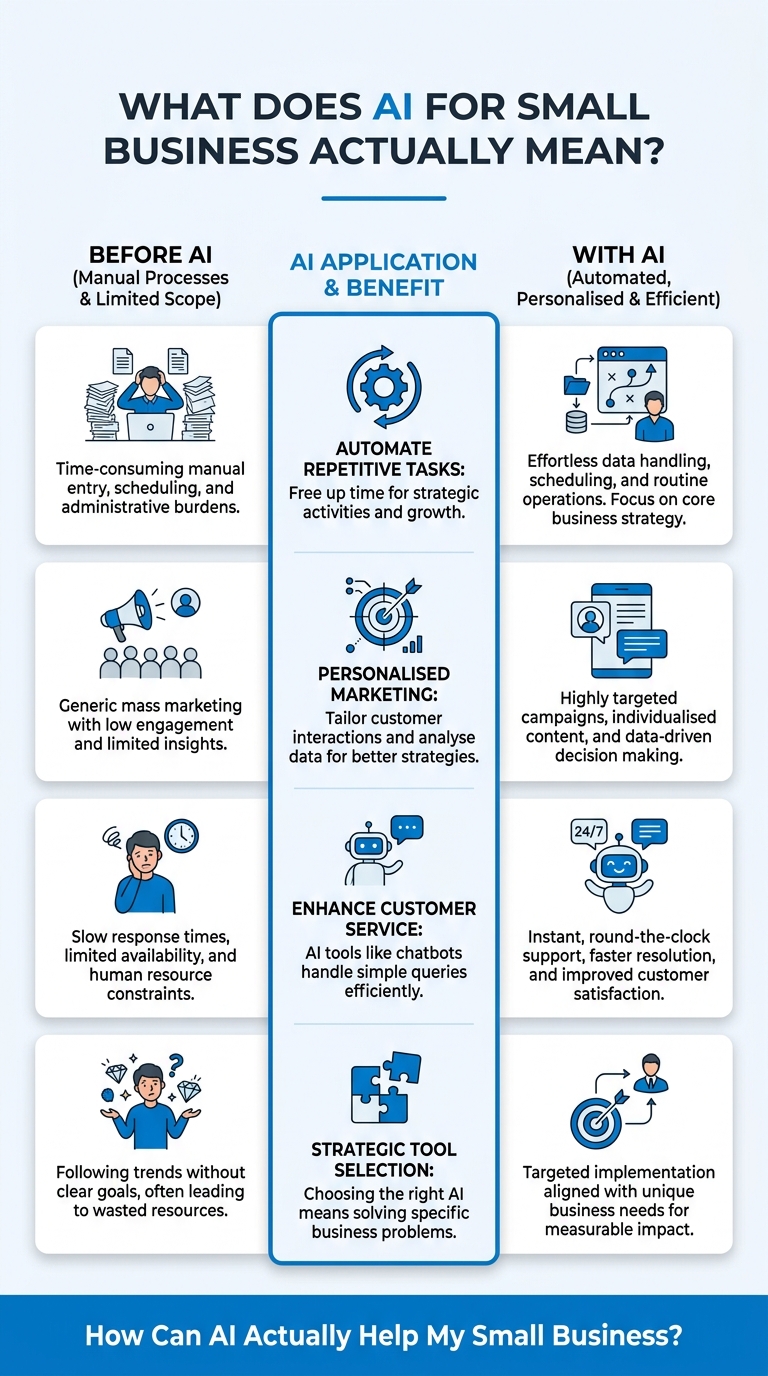
AI can automate repetitive tasks, freeing up time for strategic activities.
In marketing, AI personalises customer interactions and analyses data for better strategies.
AI tools like chatbots enhance customer service by handling simple queries efficiently.
Choosing the right AI tools means solving specific business problems, not following trends.
Key Answer
AI can revolutionise small businesses by automating tasks, improving customer service, and enhancing marketing efforts. It saves time, reduces repetitive work, and boosts productivity.
Ever found yourself wondering, “How can AI actually help my small business?” The buzz around Artificial Intelligence might feel like something meant for big tech companies, but that’s far from the truth. In Australia, small business owners are discovering how AI can streamline operations, reduce repetitive tasks, and even boost productivity.
With the right approach, AI can offer practical solutions tailored to your unique business needs.
What Does AI for Small Business Actually Mean?
AI, or artificial intelligence, is essentially about teaching computers to perform tasks that would normally require human intelligence. This might sound a bit high-tech, but in the world of small businesses, it’s all about using technology to make life easier. Whether it’s automating emails, sorting through piles of data, or even generating content, AI takes on the legwork, allowing you to focus on the big picture. It’s not about replacing jobs but enhancing the way you work.
What Everyday Business Tasks Can AI Help With?
When it comes to everyday business tasks, AI can be a real game-changer. Think about those hours you spend sifting through emails or compiling data reports. AI tools can automate these processes, letting you reclaim that time for more strategic activities. For instance, AI can handle customer enquiries, manage bookings, and even draft routine communications. By taking over these repetitive tasks, AI frees up your time to focus on what you do best–growing your business.
How Can AI Help With Marketing and Content?
In the marketing arena, AI really shines by automating mundane tasks and personalising customer interactions. Picture this: you’re managing your social media accounts, trying to keep up with posting schedules and responding to comments. AI tools can schedule posts, personalise email campaigns, and even analyse customer data to improve your marketing strategy.
By reducing the manual workload, AI gives you the edge in staying competitive and responsive to your customers’ needs.
Can AI Improve Customer Service and Sales?
Customer service is an area where AI can make a significant impact. Imagine having a virtual assistant that can answer customer queries anytime. Tools like chatbots can handle simple questions, allowing your team to focus on more complex issues. Additionally, AI can help with sales by automating follow-ups and scoring leads. This means your sales team can concentrate on closing deals rather than chasing leads, ultimately improving your bottom line.
How Can AI Reduce Admin and Repetitive Work?
Admin tasks often consume a lot of time, but AI can simplify these processes. Whether it’s data entry, invoice management, or scheduling meetings, AI tools can automate these tasks, freeing you from the tedium of repetitive work. For example, AI-driven software can automatically organise meeting notes and remind you of upcoming tasks, keeping everything running smoothly and efficiently. This means less time on admin and more time focusing on business growth.
Which AI Tools for Small Business Should You Consider?
Choosing the right AI tools for your small business can be a daunting task given the sheer number of options available. Start by identifying the most repetitive tasks or biggest challenges your business faces. Always choose tools that solve specific problems rather than following trends. Remember, it’s not about having the fanciest tool but the right one for your needs.
How Do You Start Using AI Safely and Measure the Results?
Before diving into AI, it’s crucial to consider privacy and data security. Start with a small, manageable project where AI can have a measurable impact. Monitor results by tracking metrics like time saved or improved customer response times. It’s important to maintain a balance; ensure human oversight to prevent over-automation. By evaluating outcomes, you can make informed decisions about scaling AI use in your business.
Conclusion: Start With a Business Problem, Not an AI Tool
When considering AI, start by pinpointing a business problem you want to solve, not the tool itself. Testing AI on a small scale allows you to see tangible benefits without overwhelming your resources. As you become more comfortable, you can expand its use where it adds the most value. To discuss how AI can align with your marketing goals, talk to the experts at solomoIT and get started on leveraging AI for your small business.
Frequently Asked Questions
AI for small businesses involves using technology to automate tasks, improve efficiency, and enable smarter decision-making.
AI tools like chatbots can handle simple customer queries, allowing your team to focus on more complex issues and improving overall service quality.
Tools like iBeVisible for blog automation and content repurposing are popular among small businesses for their ease of use and effectiveness.
Begin by identifying specific business problems you want to solve, then select AI tools that address those issues. Start small, monitor the results, and scale accordingly.
Key risks include handling inaccurate information, data privacy concerns, and over-automation. Human oversight is essential to mitigate these risks.
