

Share this article

Table of Contents

How Do I Know if My Digital Marketing Is Actually Working?

How Do I Know if My Digital Marketing Is Actually Working?

Table of Contents

Key Takeaways

  • Successful digital marketing results in increased enquiries, qualified leads, and sales.

  • Focus on metrics like conversion rates, cost per lead, and ROI to measure effectiveness.

  • Track which marketing channels are most effective for customer acquisition.

  • Digital marketing efforts generally show significant results within 3-6 months.

Key Answer

Discover how to determine the effectiveness of your digital marketing efforts. Focus on business metrics over vanity metrics to ensure your marketing strategy drives real growth.

In today’s digital age, small business owners often wonder, “How do I know if my digital marketing is actually working?” With so much emphasis on digital marketing services, it’s crucial to understand whether your efforts are translating into real business growth.

In this guide, we’ll break down the key indicators of success and how you can track them effectively.

What Does Successful Digital Marketing Actually Look Like?

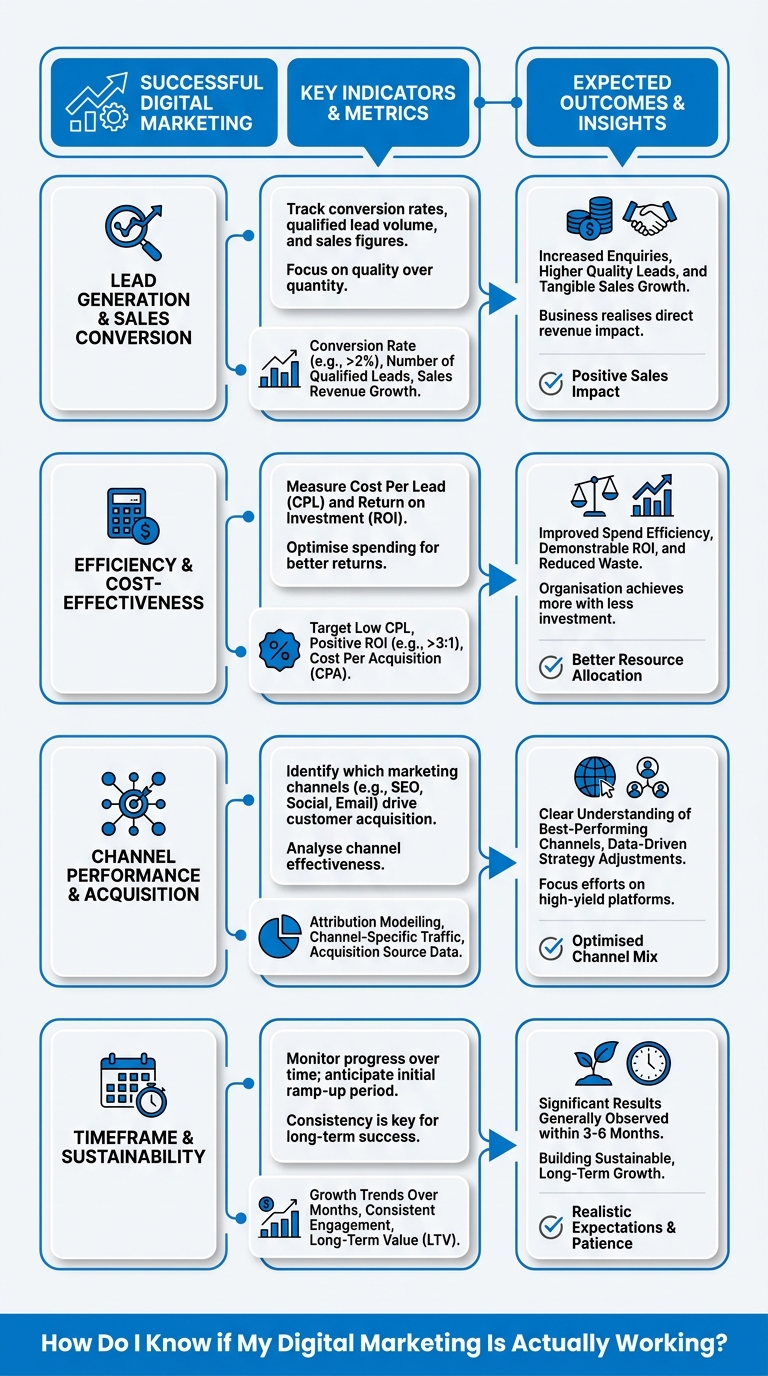
Successful digital marketing isn’t just about flashy ads or the number of likes on your Facebook page. At its core, successful digital marketing should lead to tangible business results. This means your efforts are driving more enquiries, increasing qualified leads, boosting bookings, and ultimately, generating more sales.

For instance, if you’re investing in digital marketing services, you want to see a clear connection between your online campaigns and increased foot traffic to your storefront or more phone calls from potential customers. It’s about enhancing your business’s reach and reputation while ensuring that the money you spend is bringing in more than it’s costing you.
infographic_cuvRU5oacz.jpg

Which Digital Marketing Metrics Really Matter?

In the world of digital marketing, not all metrics are created equal. While it’s easy to get caught up in vanity metrics like page views or social media followers, they don’t always equate to business success. What you should focus on are the conversion rates, cost per lead, and the return on investment (ROI) of your campaigns.

These are the metrics that show you the effectiveness of your marketing strategy. For example, a higher conversion rate means that your marketing efforts are successfully turning potential leads into paying customers. By focusing on these, you can see a clearer picture of how your digital marketing strategies are performing.

Are Website Traffic, Rankings and Social Media Likes Enough?

While website traffic, SEO rankings, and social media likes are important metrics, they only tell part of the story. High traffic and many likes are great, but if they aren’t leading to enquiries or sales, they aren’t doing much for your business.

Think of these metrics as indicators of your digital presence. They help you gauge how well you’re reaching your target audience, but they don’t prove your marketing is working. The real success is when these numbers translate into more leads and increased sales.

Which Marketing Channels Are Bringing You Customers?

Knowing which marketing channels bring you customers is essential for refining your strategy. Tools like Google Analytics can help you track where your traffic is coming from, whether it’s paid search, social media, or organic search.

Focus on the channels that yield the most conversions and sales. If your Facebook ads are driving the most leads, it might be worth investing more there. By understanding these insights, you can allocate your marketing budget more effectively, maximising your return.

How Long Should Digital Marketing Take to Show Results?

One common question is how long it takes to see the results of digital marketing efforts. While some digital solutions, like Google Ads, can show results quickly, SEO and content marketing might take a bit longer to bear fruit.

Generally, you can expect to see noticeable improvements in 3-6 months. It’s important to remember that patience and continuous optimisation are key. Regularly assessing your digital marketing strategy helps ensure you’re on the right track.

How Can You Tell if Your Marketing Spend Is Worth It?

Evaluating whether your marketing spend is worth it involves comparing your costs to the benefits. Calculate your cost per lead and compare it to the value each new customer brings to your business. This is where understanding your customer lifetime value comes in.

If your digital marketing spend is bringing in customers who spend more than the cost of acquiring them, you’re on the right track. Regularly review your expenses and returns to ensure your marketing investments are sound.

What Are the Warning Signs Your Digital Marketing Is Not Working?

If you’re not seeing an increase in sales or leads, it might be time to reassess your strategy. Other warning signs include a high bounce rate on your website or a steady decline in social media engagement.

Take note of these indicators as they can guide you on what needs improving. Are people leaving your site without converting? Is your audience not engaging with your content? These insights can help you tweak your campaigns for better results.

Measure Business Results, Not Marketing Noise

In conclusion, the true measure of digital marketing success lies in the business results it drives, not just the noise it creates. While vanity metrics can be tempting, focusing on leads, sales, and ROI is crucial for assessing your strategy’s effectiveness.

To ensure your digital marketing efforts are aligned with your business goals, regularly track your progress and make necessary adjustments. By doing so, you can enhance your strategy and achieve meaningful growth.

Remember, effective digital solutions should always support measurable business objectives. If you’re uncertain about your digital marketing path, consider consulting the experts at SolomoIT to optimise your approach.

Frequently Asked Questions

Focus on conversion rates, cost per lead, and ROI instead of vanity metrics like page views and social media followers.

Typically, digital marketing efforts show noticeable improvements in 3-6 months, depending on the strategy and platforms used.

Reassess your strategy by examining metrics such as bounce rates and engagement levels. Consider seeking expert guidance for optimisation.

Use tools like Google Analytics to monitor traffic sources and identify which channels drive the most conversions and sales.

Vanity metrics like likes and followers don’t necessarily translate to business success. Focus on metrics that impact sales and customer acquisition.

Scroll to Top